
Praktik baik implementasi NUA dari seluruh stakeholder | Friday, 19 December 2025

Praktik baik implementasi NUA dari seluruh stakeholder | Thursday, 18 December 2025

Praktik baik implementasi NUA dari seluruh stakeholder | Thursday, 18 December 2025

Praktik baik implementasi NUA dari seluruh stakeholder | Thursday, 18 December 2025

Praktik baik implementasi NUA dari seluruh stakeholder | Thursday, 18 December 2025
Good practices on NUA implementation
In monitoring the implementation of the NUA, a participatory and inclusive method was employed. This involved conducting a series of focus group discussions (FGDs) with diverse stakeholders to collect insights, define key actor roles, and grasp local dynamics. The process provided a more comprehensive understanding of how the NUA is being implemented across various regions in Indonesia, highlighting both the challenges and opportunities at national and local levels. The collection of best practices and innovations from across the country demonstrates that urban transformation is occurring not only in major cities but also actively in medium and smaller cities.
In terms of content structure, this second NUA report demonstrates notable progress compared to the 2021 first-period report. Adopting a good practice-oriented approach, the report highlights 74 innovative examples from various cities and districts, covering 66 indicators—an increase from the previous report, which featured 38 practices across 28 indicators. These examples include initiatives such as the revitalization of Tebet Eco Park in Jakarta, the use of communal solar energy in Kutai Kartanegara, an integrated sanitation system in Gresik, and the application of geospatial information systems in Bontang.
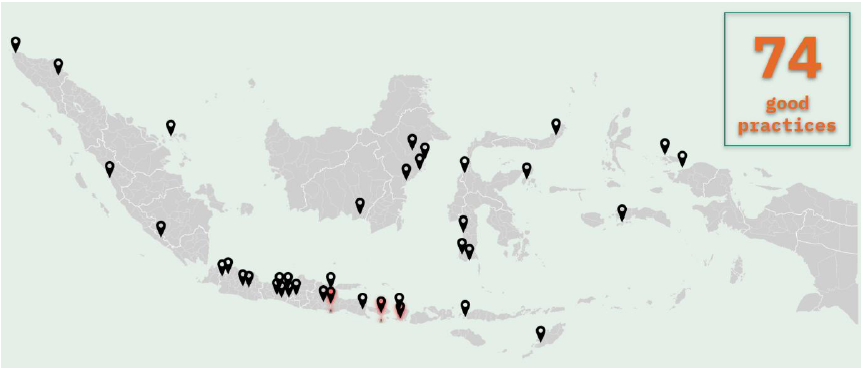
In the executive summary book, there are 16 themes, each containing 17 good practices, as follows:
3. Indicator 15 The Ratio of Land Consumption Rate to Population Growth Rate - Yogyakarta
6. Indicator 27 Green open space per capita - Yogyakarta
8. Indicator 36: Percentage of Road Length with Dedicated Sidewalks (excluding Toll Roads) - Jakarta
11. Indicator 47 Annual Number of Individuals Trained in Vocational and Technical Education - Pekalongan
16. Indicator 76 Percentage of cities using geospatial information systems - Bontang
Tuesday, 16 December 2025
NUA
Publications

A Road Map Towards a Socioeconomic Development Plan for the Union of Municipalities of Qalaat El-Istiqlal
Read Now

Kilas Balik Habitat
Apa yang kerap orang pikirkan ketika mendengar kata “kota”? Mungkin yang terlintas pertama kali di pikiran ketika mendengar kata itu ad... Read Now


 Indonesia
 English